
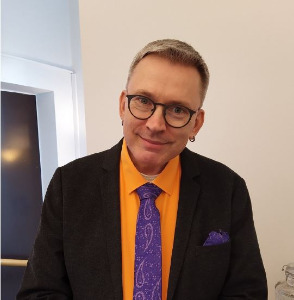
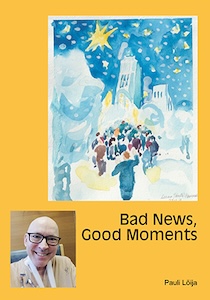
 Pauli Löija (geboren 1965) hat einen Master-Abschluss in Theologie und hat im Laufe seiner Karriere in zahlreichen verschiedenen Berufen gearbeitet, bis er 2006 an einer bipolaren Störung erkrankte, aufgrund derer er seit Anfang 2016 eine unbefristete Erwerbsunfähigkeitsrente erhält. Nachdem er an einem multiplen Myelom erkrankt war, musste er die letzten Träume von einer Rückkehr in den Beruf aufgeben. Stattdessen arbeitet er seit 2007 ehrenamtlich im Clubhouse for Mental Health Rehabilitation in Helsinki, seit 2015 als ausgebildeter Fachmann mit Erfahrung. Löijas Theaterstücke wurden 1992 und 2011 in Helsinki aufgeführt. Sein erstes Buch veröffentlichte er 2022 und sein zweites 2023. Er arbeitet ständig an neuen Texten aus verschiedenen Genres.
Andere Bücher
Huonoja uutisia, hyviä hetkiä
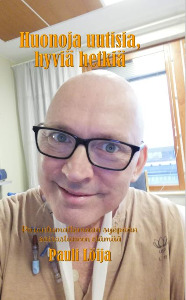
Parantumattomaan syöpään sairastuneen elämää
Kesäkuussa 2019 ambulanssi kuljetti kipujen takia liikuntakyvyttömän Pauli Löijan sairaalaan, missä häneltä löydettiin selkärangasta syövän etäpesäkkeitä. Viikkoa myöhemmin paljastui diagnoosi: multippeli myelooma, parantumaton plasmasolusyöpä.
Rankat syöpähoidot aloitettiin heti ja vuoden lopulla tehtiin kantasolusiirto, minkä jälkeen jatkettiin lääkehoitoja. Lääkäri ei lupaillut moniakaan elinvuosia, mutta siitä huolimatta positiivinen asenne on kantanut Paulia eteenpäin, päivän kerrallaan.
Paulin tarina on kertomus elämästä vakavan sairauden kanssa. Siihen sisältyy paljon iloja, ystäviä, harrastuksia, syöpähoitoja, vesivahinko kotona ja korona-pandemia. Vastoinkäymisistä huolimatta hän on löytänyt jokaisesta päivästä kauniita ja iloisia asioita. Elämä jatkuu!
Finnische Originalausgabe des englischen Buches Bad News, Good Moments
Kaufen bei Verlag Kaufen als e-book (Kindle Ausgabe) bei amazon.com
Kehnon miehen postilla
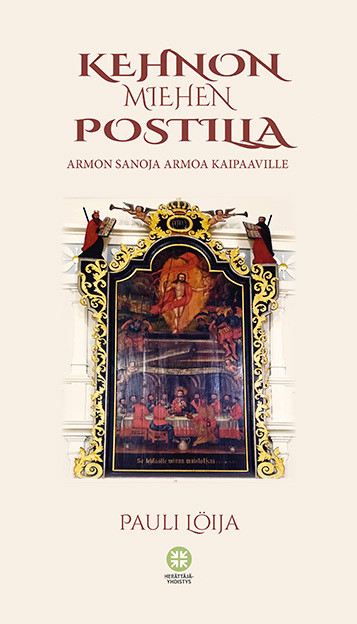 Armon sanoja armoa kaipaaville
A poor man's sermon collection - words of mercy for those who long for mercy: a book in Finnish that contains a short sermon for each holiday of the church year, 94 in total. Pauli Löija compares the biblical texts of different vintages, especially the gospel texts, and reflects on their message both through his personal experiences and in general with modern people in mind.
Löija finds discrepancies in the Gospels, but always the same congruence: in all the Gospels, Christ looks graciously at those who are considered inferior, who are oppressed, who are doors in the minority. It is to them, those who need mercy, that the words of mercy are spoken.
We don't understand anything about God, but He understands us, our weaknesses and shortcomings. It is good for us to stay there, close to the hidden God. You get to be just you, revered as the image of God as you are. You are loved by God.
Nur in Finnish